


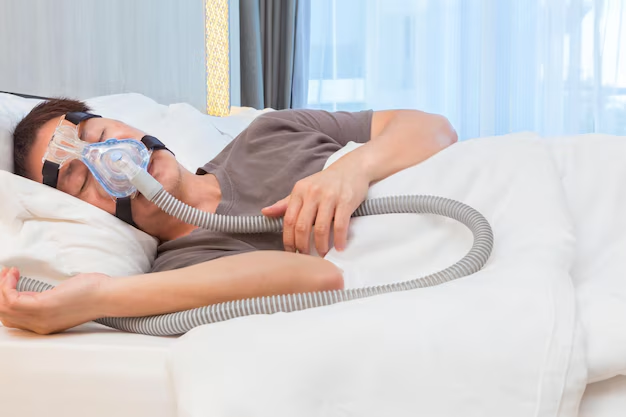
Sleep apnea is a serious sleep disorder that affects millions of people worldwide, and obesity is one of its strongest risk factors. For individuals struggling with both excess weight and disrupted sleep, bariatric surgery plays a powerful role in treating sleep apnea by addressing its root cause. Weight loss surgery not only improves sleep quality but also significantly enhances overall health and quality of life.
At Badge Health, bariatric surgery is viewed as a comprehensive health solution—not just a weight loss procedure—especially for patients suffering from obesity-related conditions like sleep apnea.
Understanding the Link Between Obesity and Sleep Apnea
Obstructive sleep apnea (OSA) occurs when the airway becomes repeatedly blocked during sleep, causing breathing interruptions. Excess weight contributes to this condition by:
- Increasing fat deposits around the neck and throat
- Narrowing the airway
- Raising pressure on the chest and lungs
As body weight increases, the severity of sleep apnea often worsens, leading to chronic fatigue, headaches, and cardiovascular complications.
How Bariatric Surgery Improves Sleep Apnea
Bariatric surgery promotes substantial and sustained weight loss, which directly impacts sleep apnea symptoms:
- Reduces fat tissue around the airway
- Improves airflow during sleep
- Decreases airway collapse episodes
- Lowers inflammation associated with obesity
Many patients experience significant improvement or complete resolution of sleep apnea within months after surgery.
Scientific Evidence Supporting Bariatric Surgery
Clinical studies consistently show that weight loss surgery can dramatically reduce sleep apnea severity:
- Lower apnea-hypopnea index (AHI) scores
- Reduced dependence on CPAP machines
- Improved oxygen saturation levels
- Better sleep continuity and depth
In some cases, patients are able to discontinue CPAP therapy entirely under medical supervision.
Additional Health Benefits Beyond Sleep
Treating sleep apnea through bariatric surgery also delivers broader health improvements:
- Reduced risk of heart disease and stroke
- Better blood pressure control
- Improved insulin sensitivity and diabetes management
- Enhanced mental clarity and mood
Quality sleep supports nearly every system in the body, amplifying the benefits of weight loss.
Who Is a Good Candidate?
Bariatric surgery may be recommended for sleep apnea patients who:
- Have a BMI of 35 or higher with sleep apnea
- Struggle with CPAP intolerance or poor compliance
- Have obesity-related conditions affecting daily life
- Have not achieved lasting weight loss through other methods
Each patient undergoes a comprehensive evaluation to ensure suitability and safety.
Post-Surgery Expectations for Sleep Apnea
Improvement in sleep apnea is typically gradual:
- Early improvements may appear within weeks
- Significant changes often occur after substantial weight loss
- Sleep studies may be repeated to assess progress
Patients should continue prescribed sleep apnea treatments until advised otherwise by their healthcare provider.
Badge Health’s Integrated Care Approach
Badge Health provides a multidisciplinary approach to treating sleep apnea through bariatric surgery:
- Coordination with sleep specialists
- Personalized surgical planning
- Comprehensive pre- and post-operative care
- Long-term monitoring of sleep and weight outcomes
Final Thoughts
Bariatric surgery offers a transformative solution for patients suffering from sleep apnea linked to obesity. By addressing the underlying cause—excess weight—patients can achieve deeper sleep, improved breathing, and better overall health. For many, this means fewer nights attached to a CPAP machine and more mornings filled with energy. With Badge Health’s expert care and ongoing support, bariatric surgery becomes a life-changing step toward restful sleep and lasting wellness.